
Description
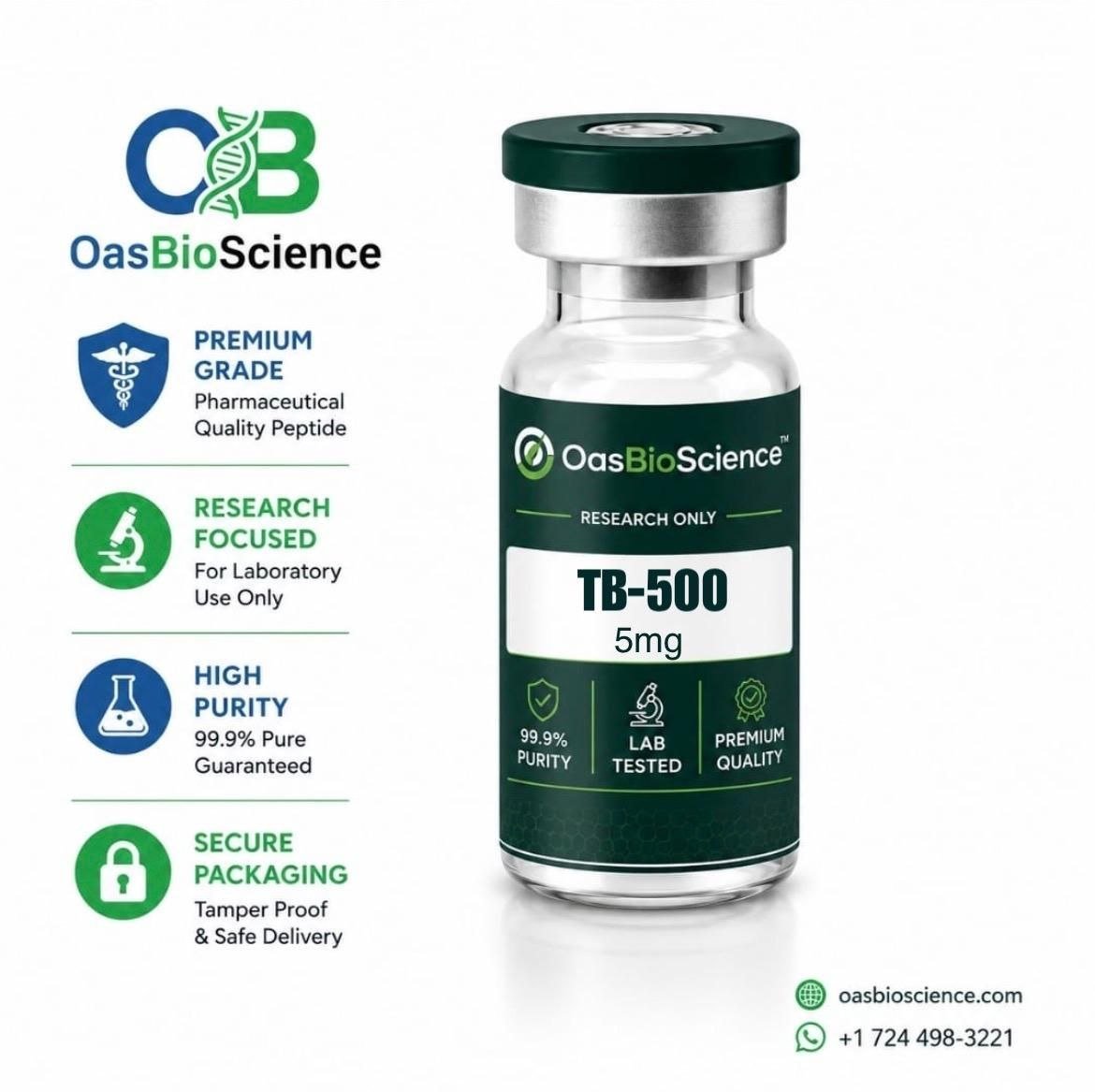
TB-500 Peptide Overview
TB-500 Peptide is a synthetic peptide commonly identified with the acetylated heptapeptide Ac-LKKTETQ, corresponding to residues 17–23 of thymosin beta-4. This short sequence is associated with the actin-binding region of the parent thymosin beta-4 molecule.
For researchers, one important point is that TB-500 and full-length thymosin beta-4 should not automatically be treated as the same material. TB-500 is commonly characterized as the approximately 889 Da acetylated fragment, while full-length thymosin beta-4 is a much larger 43-amino-acid peptide of approximately 4.9 kDa.
This distinction is important when reviewing a product’s Certificate of Analysis (COA), mass-spectrometry result, and product specifications.
«Research Use Only: TB-500 Peptide is supplied for laboratory and scientific research purposes only. It is not intended for human or veterinary use, diagnosis, treatment, cure, or prevention of disease.»
What Is TB-500 Peptide?
TB-500 is a synthetic peptide associated with the central actin-binding region of thymosin beta-4. The commonly referenced TB-500 research material is the N-terminally acetylated seven-amino-acid sequence Ac-LKKTETQ.
Researchers may encounter the name “TB-500” used inconsistently in the peptide market, including products described as full-length thymosin beta-4. For reproducible research, the sequence, molecular mass, and analytical identity should always be confirmed rather than relying on the product name alone.
TB-500 is relevant to research involving:
• Synthetic peptide characterization
• Actin-related research
• Cell biology
• Peptide structure and function
• Cell migration research
• Molecular and biochemical studies
Importantly, much of the foundational research associated with thymosin beta-4 concerns the full-length 43-residue molecule, rather than the shorter TB-500 fragment. Researchers should therefore distinguish evidence involving the fragment from evidence involving the parent peptide.
Molecular Formula, Molecular Weight & Sequence
For the commonly characterized acetylated TB-500 fragment:
Property —– Specification
Product name | TB-500 Peptide
Common chemical identity | N-acetyl-LKKTETQ
Sequence | Ac-Lys?*
Correct sequence | Ac-LKKTETQ-OH
Length | 7 amino-acid residues
Molecular formula | C₃₈H₆₈N₁₀O₁₄
Molecular weight | 889.0 g/mol
CAS | 885340-08-9
PubChem identifies TB-500 under the molecular formula C₃₈H₆₈N₁₀O₁₄ and molecular weight of approximately 889.0 g/mol, with the sequence Ac-LKKTETQ-OH.
Important identity note
Full-length thymosin beta-4 is chemically different. It contains 43 amino acids and has a molecular mass around 4.9 kDa. Researchers should check their specific product documentation to determine which molecular form is actually supplied.
For a professional product page, always list the exact form supplied by your laboratory.
Purity
A suitable research-grade specification for TB-500 may be:
Purity: ≥98% by HPLC
Where available, each batch should be supported by a lot-specific Certificate of Analysis.
Depending on the testing package, documentation may include:
• HPLC purity
• Mass spectrometry
• Molecular weight
• Lot/batch number
• Peptide quantity
• Testing date
• Appearance
• Storage information
For researchers, a reported percentage alone is not enough. The strongest product documentation connects the purity result to a specific lot number and provides analytical evidence supporting the stated identity.
Appearance
Appearance: White to off-white lyophilized powder.
TB-500 is commonly supplied in lyophilized form for laboratory research. The exact physical appearance can vary slightly depending on formulation, drying conditions, packaging, and batch characteristics.
Researchers should remember that appearance is not a substitute for analytical testing. A white powder cannot, by visual inspection alone, confirm peptide identity or purity.
Available Vial Sizes
Common research quantities can include:
• 2 mg
• 5 mg
• 10 mg
• 20 mg
• 50 mg
The most practical sizes for many laboratories are generally 5 mg and 10 mg, while larger quantities may be selected for laboratories conducting repeated analytical work.
Actual availability should depend on your current inventory and validated batch specifications.
When displaying vial sizes on your WooCommerce product page, clearly state the net peptide quantity rather than relying on vial dimensions or fill volume.
Storage Recommendations
Correct storage helps protect peptide quality during laboratory use.
For lyophilized TB-500:
• Follow the storage temperature stated on the product’s batch documentation.
• Keep the vial tightly sealed when not being used.
• Protect the material from excessive moisture.
• Minimize unnecessary exposure to heat and light.
• Avoid repeated temperature cycling.
• Allow a cold vial to equilibrate appropriately before opening to minimize condensation.
A commonly listed research-storage condition for lyophilized peptide material is -20°C, but the manufacturer’s validated storage recommendation and batch documentation should take priority.
After reconstitution, storage requirements can differ substantially from those of the dry lyophilized material.
Reconstitution Information
TB-500 is supplied as a lyophilized research material. If reconstitution is required for an approved laboratory protocol, researchers should select a compatible solvent and concentration based on the requirements of their experiment.
General laboratory considerations include:
1. Allow the sealed vial to reach a suitable temperature before opening.
2. Use an appropriate research-grade solvent.
3. Introduce the solvent carefully.
4. Avoid unnecessarily vigorous agitation.
5. Allow the material adequate time to dissolve.
6. Avoid excessive foaming.
7. Prepare aliquots when appropriate to reduce repeated freeze–thaw exposure.
8. Clearly record concentration, solvent, preparation date, and storage conditions.
There is no single reconstitution volume that is correct for every research application. The required volume should be calculated from the desired experimental concentration.
Intended Use — Research Use Only
TB-500 Peptide is intended exclusively for laboratory research.
It is not intended to be marketed or represented as a medicine, dietary supplement, cosmetic treatment, or therapeutic product.
It should not be promoted for human or animal administration. Researchers are responsible for following applicable institutional safety procedures, regulations, handling requirements, and disposal protocols.
«Research Use Only. Not for human or veterinary consumption.»
Packaging & Shipping Information
TB-500 should be packaged in a manner that protects the lyophilized material during normal transportation.
A professional research-peptide package may include:
• Sealed peptide vial
• Product identification label
• Net quantity
• Lot/batch number
• Research-use-only statement
• Appropriate protective packaging
• Certificate of Analysis or batch documentation, where applicable
Before accepting a shipment into laboratory inventory, researchers should inspect the vial and packaging for visible damage and confirm that the product information corresponds with the accompanying documentation.
Shipping conditions should follow the product’s validated stability requirements and applicable transportation rules.
Frequently Asked Questions
What is TB-500 Peptide?
TB-500 is commonly used to describe a synthetic, N-terminally acetylated heptapeptide corresponding to the LKKTETQ region of thymosin beta-4.
What is the sequence of TB-500?
The commonly characterized sequence is:
Ac-LKKTETQ-OH
This represents the N-terminally acetylated seven-residue fragment.
What is the molecular formula of TB-500?
For the commonly characterized acetylated fragment, the molecular formula is C₃₈H₆₈N₁₀O₁₄.
What is the molecular weight?
The reported molecular weight of this TB-500 fragment is approximately 889.0 g/mol.
Is TB-500 the same as thymosin beta-4?
Not necessarily. This is an important distinction. The commonly characterized TB-500 fragment is approximately 889 Da, whereas full-length thymosin beta-4 contains 43 amino acids and is approximately 4.9 kDa.
What does TB-500 look like?
It is commonly supplied as a white to off-white lyophilized powder.
What purity should I look for?
A professional research specification may state ≥98% purity by HPLC, with the actual result documented on a lot-specific COA.
Should TB-500 have a COA?
A properly documented research product should ideally have batch-specific analytical documentation. Researchers should check the lot number, HPLC result, molecular-weight data, and other available analytical information.
How should TB-500 be stored?
Follow the storage instructions provided with the specific batch. Lyophilized material is commonly stored under controlled frozen conditions, such as -20°C, when supported by the manufacturer’s validated specifications.
How should TB-500 be reconstituted?
Reconstitution depends on the laboratory protocol, solvent compatibility, and required concentration. There is no universal reconstitution volume suitable for every experiment.
Is TB-500 approved for human use?
This product description is for a research-use-only material. It should not be presented as an approved human therapeutic or recommended for human or veterinary administration.
Key Takeaway
TB-500 Peptide is a synthetic peptide commonly associated with the acetylated Ac-LKKTETQ fragment of thymosin beta-4. For the commonly characterized fragment, the molecular formula is C₃₈H₆₈N₁₀O₁₄ and the molecular weight is approximately 889.0 g/mol.
The most important consideration when purchasing TB-500 for research is chemical identity. Because “TB-500” is sometimes used inconsistently to describe either the short fragment or full-length thymosin beta-4, researchers should verify the sequence, molecular weight, HPLC purity, mass-spectrometry data, and batch-specific COA before using the material.
For a professional product page, transparent specifications are more valuable than exaggerated claims. Clearly communicating the exact peptide form, analytical purity, storage requirements, and research-use status helps researchers select and document their materials more confidently.
Research Use Only. Not for Human or Veterinary Use.
Read the Below Topics to Boost Your Knowledge on Peptides:
- Are peptides safe?
- How Are Peptides Made?
- Peptide Purity explained in depth
- What Does HPLC Testing Mean?
- How do I read a COA?
- How Should Peptides Be Stored?
- How Long Do Peptides Last?
Scientific Reference: For additional peer-reviewed information on peptide stability, sterile preparation, and pharmaceutical reconstitution practices, visit PubMed
Reviews
There are no reviews yet.