
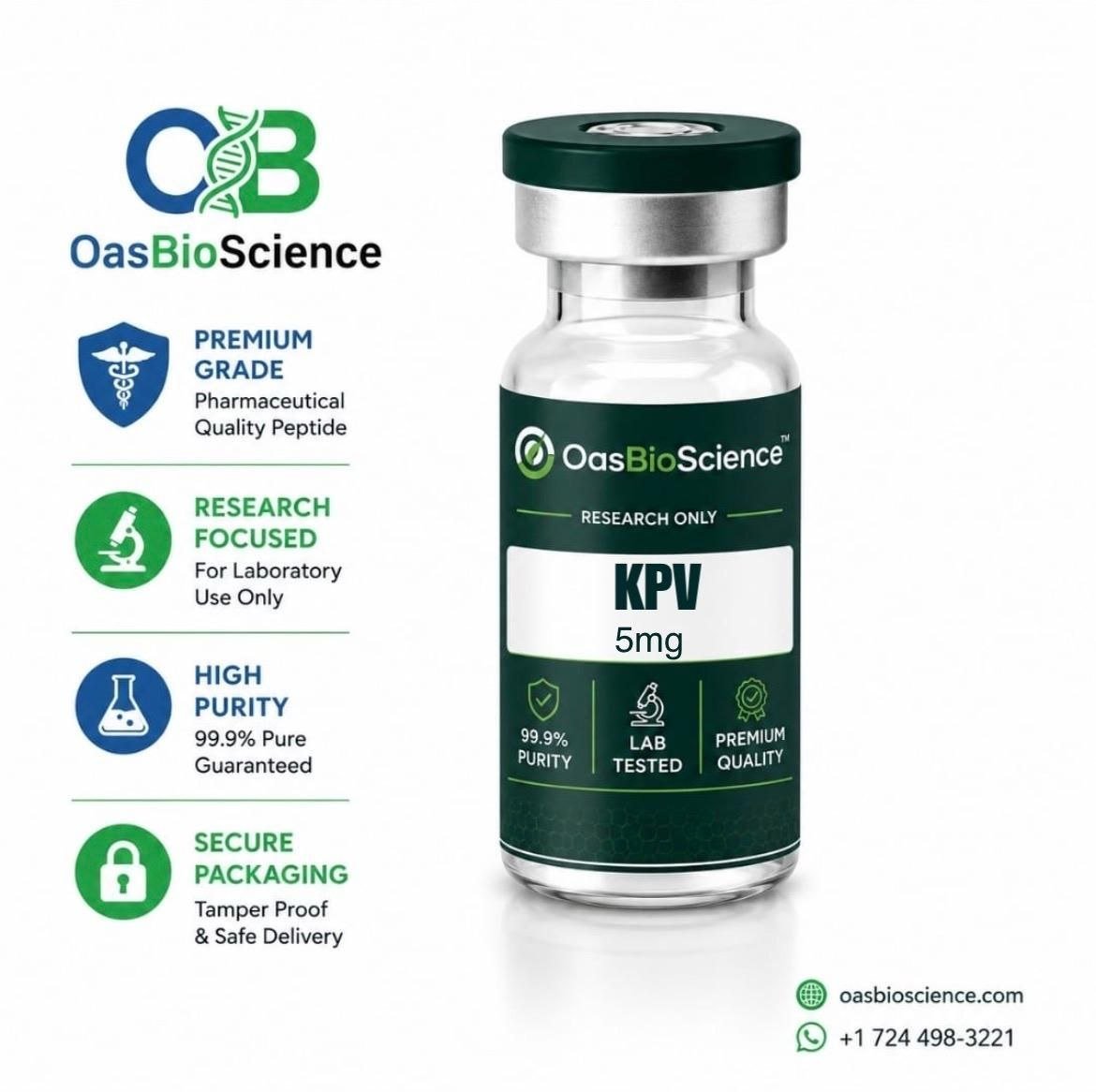
Description
KPV Peptide Overview
KPV Peptide is a short synthetic tripeptide consisting of the three amino acids Lys-Pro-Val. It is associated with the C-terminal portion of α-melanocyte-stimulating hormone (α-MSH) and has been investigated in preclinical research involving inflammatory signaling, cellular pathways, and peptide biology.
Because KPV is a very short peptide, researchers may use it as a model compound for studying peptide structure, biological signaling, and structure–activity relationships.
Research Use Only: KPV Peptide is supplied for laboratory and scientific research purposes only. It is not intended for human or veterinary use, diagnosis, treatment, cure, or prevention of disease.
What Is KPV Peptide?
KPV Peptide is a synthetic tripeptide composed of:
Lysine–Proline–Valine
Its one-letter amino-acid sequence is:
KPV
KPV is commonly described as the C-terminal tripeptide sequence of α-MSH. Research involving KPV has explored its interaction with biological pathways associated with inflammatory signaling and cellular responses.
Potential laboratory research areas include:
- Peptide chemistry
- Inflammatory signaling research
- Cellular biology
- α-MSH-related pathway research
- Structure–activity relationship studies
- Peptide stability investigations
- Synthetic peptide characterization
Importantly, findings from laboratory and preclinical studies should not automatically be interpreted as evidence of established therapeutic effects in humans.
Molecular Formula, Molecular Weight & Sequence
Commonly reported specifications for KPV Peptide include:
| Property | Specification |
|---|---|
| Product name | KPV Peptide |
| Peptide type | Synthetic tripeptide |
| Sequence | Lys-Pro-Val (KPV) |
| Length | 3 amino acids |
| Molecular formula | C₂₀H₃₅N₅O₄ |
| Molecular weight | Approximately 409.53 g/mol |
| CAS number | 67727-37-5 |
The molecular characteristics make KPV substantially smaller than many commonly researched peptides.
For professional research applications, researchers should compare the stated molecular weight with the analytical data associated with the specific batch.
Why the exact chemical form matters
Peptides may be supplied in different chemical forms, including free peptide or salt forms. Counterions can affect the reported molecular weight.
Therefore, the product label, specification sheet, COA, and mass-spectrometry result should correspond to the same chemical form.
Purity
A suitable research-grade specification for KPV Peptide may be:
Purity: ≥98% by HPLC
The actual purity should be confirmed using the batch-specific Certificate of Analysis (COA).
Depending on the testing package, documentation may include:
- HPLC purity percentage
- HPLC chromatogram
- Mass spectrometry
- Calculated molecular weight
- Observed molecular weight
- Lot/batch number
- Testing date
- Net peptide quantity
A batch-specific COA provides researchers with more useful information than relying only on a general product-page purity statement.
Appearance
Appearance: White to off-white lyophilized powder.
Lyophilization is commonly used to provide peptides in a dry form suitable for controlled laboratory storage.
Minor variations in powder texture or color can occur depending on manufacturing and drying conditions.
However, appearance alone cannot confirm peptide identity or purity. Researchers should rely on analytical techniques such as HPLC and mass spectrometry when verification is required.
Available Vial Sizes
KPV Peptide can be supplied in several quantities according to laboratory requirements.
Common research vial sizes include:
- 2 mg
- 5 mg
- 10 mg
- 20 mg
- 50 mg
For many laboratory projects, 5 mg and 10 mg formats provide convenient research quantities.
Larger quantities may be appropriate for laboratories conducting repeated experiments or analytical studies.
Always make the net peptide quantity per vial clear on the product page and packaging.
Storage Recommendations
Proper storage helps preserve the quality of lyophilized peptide material.
For lyophilized KPV Peptide:
- Follow the storage temperature specified in the applicable product documentation.
- Keep the vial tightly sealed.
- Protect the peptide from moisture.
- Minimize exposure to excessive heat and direct light.
- Avoid unnecessary temperature cycling.
- Allow a cold vial to equilibrate appropriately before opening to minimize condensation.
Controlled frozen storage may be appropriate for long-term storage when supported by applicable stability information.
Important: Storage conditions may vary depending on formulation, packaging, and stability data. Always prioritize the instructions supplied with the specific batch.
Reconstitution Information
KPV Peptide is supplied as a lyophilized research material. When reconstitution is required, researchers should select a compatible solvent and concentration according to their validated laboratory protocol.
General laboratory considerations include:
- Allow the sealed vial to reach a suitable temperature before opening.
- Use a compatible laboratory-grade solvent.
- Introduce the solvent carefully.
- Avoid unnecessarily vigorous agitation.
- Allow sufficient time for dissolution.
- Minimize excessive foaming.
- Consider aliquoting when appropriate to reduce repeated freeze–thaw exposure.
- Record the solvent, concentration, preparation date, and storage conditions.
There is no universal reconstitution volume for every KPV research application.
Researchers should determine the concentration required by their experiment and calculate the appropriate solvent volume accordingly.
Intended Use — Research Use Only
KPV Peptide is intended exclusively for laboratory research.
It should not be marketed as:
- A dietary supplement
- A general wellness product
- A cosmetic treatment
- An approved therapeutic
- A product for self-administration
This research material is not intended for human or veterinary administration.
Researchers are responsible for following applicable laboratory safety procedures, institutional policies, and regulatory requirements.
Research Use Only. Not for Human or Veterinary Use.
Packaging & Shipping Information
KPV Peptide should be packaged appropriately to protect the lyophilized material during transportation.
Professional research packaging may include:
- Securely sealed peptide vial
- Product identification label
- Net peptide quantity
- Lot/batch number
- Research-use-only statement
- Protective secondary packaging
- Batch-specific COA or analytical documentation, where applicable
Upon receipt, researchers should inspect the vial and packaging for visible damage.
Before placing the material into laboratory inventory, verify the:
Product name + quantity + lot number + chemical form + COA
Shipping conditions should follow the product’s applicable stability requirements and relevant transportation regulations.
Frequently Asked Questions About KPV Peptide
What is KPV Peptide?
KPV is a synthetic three-amino-acid peptide consisting of lysine, proline, and valine. It is associated with the C-terminal portion of α-MSH and has been investigated in preclinical peptide and cellular research.
What does KPV stand for?
KPV represents the three amino acids in its sequence:
K = Lysine
P = Proline
V = Valine
What is the sequence of KPV Peptide?
The sequence is:
Lys-Pro-Val (KPV)
How many amino acids are in KPV?
KPV is a tripeptide, meaning it contains three amino-acid residues.
What is the molecular formula of KPV?
The commonly reported molecular formula is:
C₂₀H₃₅N₅O₄
What is the molecular weight of KPV?
The molecular weight is approximately:
409.53 g/mol
The precise reported mass can vary depending on the chemical form.
What is the CAS number?
KPV is commonly identified by CAS 67727-37-5.
What does KPV Peptide look like?
Research-grade KPV is generally supplied as a white to off-white lyophilized powder.
What purity should researchers look for?
A research-grade specification may state ≥98% purity by HPLC. Researchers should verify the actual purity using the COA associated with the specific batch.
Should KPV Peptide come with a COA?
For professional research supply, batch-specific analytical documentation is highly valuable. Researchers should look for HPLC purity, mass-spectrometry information, molecular-weight data, lot number, and testing date where available.
How should KPV Peptide be stored?
Follow the storage conditions supplied with the specific batch. Protect the lyophilized material from moisture, excessive heat, direct light, and unnecessary temperature cycling.
How is KPV Peptide reconstituted?
Reconstitution depends on the laboratory protocol, solvent compatibility, desired concentration, and experimental requirements. There is no universal reconstitution volume suitable for every application.
Is KPV the same as α-MSH?
No. KPV is a three-amino-acid sequence associated with the C-terminal portion of α-MSH, while α-MSH is a substantially longer peptide.
Is KPV intended for human use?
This product is presented as a research-use-only material and should not be marketed or recommended for human or veterinary administration.
11. Key Takeaway
KPV Peptide is a short synthetic tripeptide with the sequence Lys-Pro-Val (KPV). Its small molecular structure makes it a useful research compound for investigations involving peptide chemistry, cellular signaling, and α-MSH-related pathways.
The commonly reported molecular formula is C₂₀H₃₅N₅O₄, with a molecular weight of approximately 409.53 g/mol.
For researchers, the most important purchasing considerations are:
- Accurate peptide identity
- Confirmed sequence
- Correct molecular weight
- Appropriate analytical purity
- Batch-specific COA
- Proper storage information
- Clear research-use labeling
A professional KPV product page should provide transparent scientific specifications while avoiding unsupported claims about human therapeutic benefits.
Research Use Only. Not for Human or Veterinary Use.
Continue Learning: If you found this guide helpful, you may also want to read our previous peptide education articles covering Below
- What Bacteriostatic Water Should I Use For My Peptide?
- What’s Peptide Reconstitution?
- How Long Do Peptides Last?
- How Should Peptides Be Stored?
- How do I read a COA?
- What Does HPLC Testing Mean?
- Peptide Purity explained in depth
- Are peptides safe?
- Peptide Bubbles after reconstitution?
- Which peptide suppresses appetite the most?
Scientific Reference: For additional peer-reviewed information on peptide stability, sterile preparation, and pharmaceutical reconstitution practices, visit PubMed


Reviews
There are no reviews yet.