

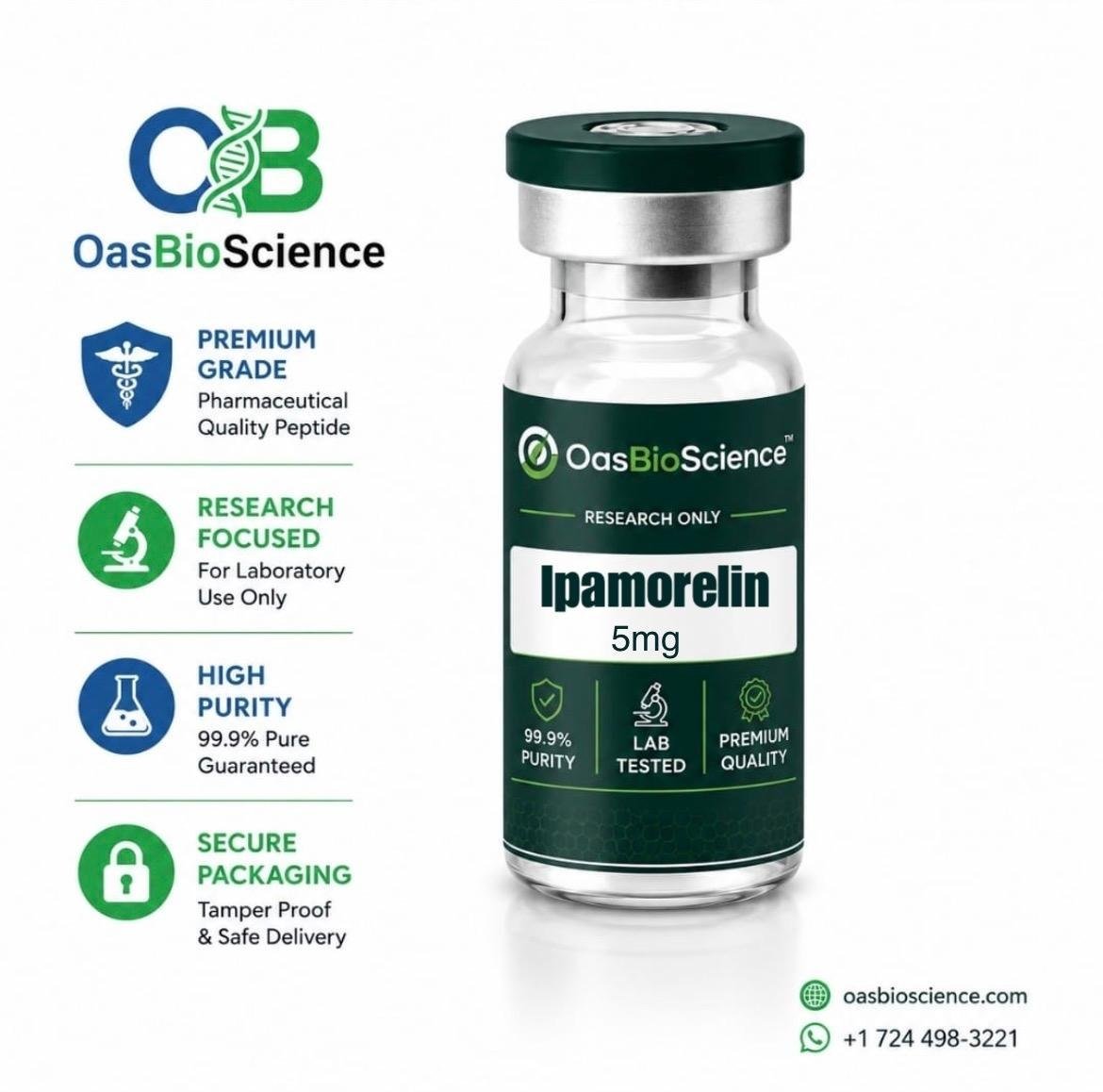
Description
Ipamorelin Peptide is a synthetic pentapeptide and selective growth hormone secretagogue that has been investigated extensively in peptide and endocrine research. It belongs to the growth hormone secretagogue class and has been studied for its interaction with the growth hormone secretagogue receptor (GHSR).
Unlike naturally occurring peptides, Ipamorelin is a laboratory-synthesized compound with a short, specifically modified amino-acid sequence. Research has examined its ability to stimulate growth hormone release in experimental models.
For laboratory researchers, product identity, analytical purity, accurate labeling, appropriate storage, and reliable documentation are important when selecting an Ipamorelin Peptide material.
«Research Use Only: Ipamorelin Peptide is supplied for laboratory and scientific research purposes only. It is not intended for human or veterinary use, diagnosis, treatment, or prevention of disease.»
What Is Ipamorelin Peptide?
Ipamorelin is a synthetic pentapeptide consisting of five amino-acid residues. It was developed as a growth hormone secretagogue and has been investigated in experimental pharmacology and endocrine research.
Research has demonstrated that Ipamorelin can stimulate growth hormone release through the growth hormone secretagogue receptor pathway. Early pharmacological research compared its growth-hormone-releasing activity with other secretagogues and reported relatively selective activity in experimental models.
For research purposes, Ipamorelin is particularly relevant to studies involving:
• Peptide pharmacology
• Growth hormone signaling
• GHSR receptor research
• Endocrine research
• Peptide structure–activity relationships
• Synthetic peptide characterization
Molecular Formula, Molecular Weight & Sequence
Researchers should verify the exact chemical identity of the material they receive because peptide salts, counterions, and formulations can affect reported molecular weight.
Ipamorelin free peptide:
Property | Specification
Chemical name | Ipamorelin
CAS Number | 170851-70-4
Molecular formula | C₃₈H₄₉N₉O₅
Molecular weight | Approximately 711.9 g/mol
Peptide length | 5 residues
Sequence | Aib-His-D-2-Nal-D-Phe-Lys-NH₂
PubChem identifies Ipamorelin as C₃₈H₄₉N₉O₅ with a molecular weight of approximately 711.9 g/mol and lists the sequence as Aib-His-D-2-Nal-D-Phe-Lys-NH₂.
The sequence is important when confirming identity through analytical methods such as mass spectrometry.
Purity
Our Ipamorelin Peptide should be accompanied by appropriate quality documentation identifying the analytical specification for the individual batch.
A typical research-grade specification is:
Purity: ≥98% by HPLC
Where applicable, analytical documentation may include:
• HPLC purity analysis
• Mass spectrometry confirmation
• Batch or lot identification
• Molecular weight information
• Manufacturing or testing date
• Certificate of Analysis (COA)
Researchers should always review the batch-specific COA rather than relying solely on a general product-page specification.
Appearance
Appearance: White to off-white lyophilized powder.
Lyophilization is commonly used for synthetic peptides because removing water can help provide a stable solid material for storage and transportation.
The physical appearance of a peptide may vary slightly between batches depending on formulation, concentration, drying conditions, and handling. Appearance alone should therefore not be considered proof of peptide identity or purity.
Available Vial Sizes
For laboratory research, smaller vial sizes are useful for individual experiments, while larger quantities may be more practical for laboratories conducting repeated analytical or experimental work.
Commonly requested research vial sizes include:
• 2 mg
• 5 mg
• 10 mg
• 20 mg
• 50 mg
Availability may vary according to production batch and inventory.
Researchers should select the quantity according to their validated experimental requirements rather than purchasing based solely on price or vial size.
Storage Recommendations
Proper storage is important for maintaining peptide quality over time.
For lyophilized Ipamorelin Peptide:
• Store according to the temperature specified on the product documentation or COA.
• Keep the vial tightly closed.
• Protect the material from excessive moisture.
• Minimize unnecessary exposure to heat and light.
• Allow a cold vial to reach an appropriate temperature before opening to reduce the risk of condensation.
• Avoid repeated temperature cycling whenever possible.
For long-term research storage, researchers commonly use appropriately controlled frozen storage conditions according to their laboratory’s validated peptide-storage procedures.
Important: Storage recommendations can vary depending on formulation, packaging, and stability data. Always follow the batch-specific documentation supplied with the product.
Reconstitution Information
Ipamorelin Peptide is supplied as a lyophilized research material. If a laboratory protocol requires reconstitution, the researcher should select a solvent and concentration compatible with the experimental design and the peptide’s characteristics.
General laboratory considerations include:
1. Allow the sealed vial to reach an appropriate temperature before opening.
2. Use a clean, compatible solvent selected for the intended research application.
3. Introduce the solvent slowly along the vial wall when appropriate.
4. Allow the material to dissolve without unnecessarily vigorous agitation.
5. Avoid creating excessive foam.
6. If the research protocol permits, prepare aliquots to minimize repeated freeze–thaw cycles.
7. Record the concentration, solvent, date of preparation, and storage conditions.
There is no universal reconstitution volume that applies to every experiment. Researchers should calculate the required concentration from the experimental protocol rather than following a generic volume without considering their intended application.
Intended Use — Research Use Only
Ipamorelin Peptide is intended strictly for laboratory research purposes.
It is not marketed as a dietary supplement, cosmetic ingredient, or approved therapeutic product. It should not be represented as a product for diagnosing, treating, curing, or preventing a disease.
Researchers are responsible for ensuring that their use, handling, storage, and disposal procedures comply with applicable institutional, laboratory, and regulatory requirements.
Packaging & Shipping
Ipamorelin Peptide should be packaged to help protect the lyophilized material during normal transportation.
Typical research-peptide packaging may include:
• Clearly labeled vial
• Peptide name
• Quantity
• Batch/lot identification
• Research-use labeling
• Protective secondary packaging
• Appropriate shipping protection
Shipping conditions should be selected according to the product’s stability requirements and applicable transportation considerations.
Upon receipt, researchers should inspect the package and vial for visible damage and compare the product information with the accompanying documentation.
Frequently Asked Questions
What is Ipamorelin Peptide?
Ipamorelin is a synthetic five-residue peptide investigated as a growth hormone secretagogue. Its research history includes studies of growth hormone release and GHSR-related pharmacology.
What is the sequence of Ipamorelin?
The reported sequence is Aib-His-D-2-Nal-D-Phe-Lys-NH₂.
What is the molecular weight of Ipamorelin?
The molecular weight of the free peptide is approximately 711.9 g/mol.
What is the molecular formula?
The molecular formula is C₃₈H₄₉N₉O₅.
What does Ipamorelin look like?
Research-grade Ipamorelin is commonly supplied as a white to off-white lyophilized powder.
What purity should researchers look for?
A commonly specified research-grade standard is ≥98% purity by HPLC, supported by batch-specific analytical documentation.
Does Ipamorelin come with a COA?
A reputable research supplier should provide appropriate batch documentation, such as a Certificate of Analysis, where applicable. Researchers should check the COA for identity, purity, lot number, and analytical results.
How should Ipamorelin be stored?
Store the lyophilized peptide according to the supplier’s batch-specific storage instructions. Protect it from moisture, excessive heat, light, and unnecessary temperature cycling.
How should Ipamorelin be reconstituted?
Reconstitution depends on the research protocol, desired concentration, solvent compatibility, and experimental application. There is no single volume appropriate for every laboratory experiment.
Is Ipamorelin for human use?
No. Products sold under a research-use-only model should be used exclusively for laboratory research and should not be administered to humans or animals.
Key Takeaway
Ipamorelin Peptide is a well-characterized synthetic pentapeptide used in laboratory research involving growth hormone secretagogue activity, peptide pharmacology, and endocrine signaling.
For researchers, the most important purchasing considerations are not simply the vial size or advertised purity. Confirm the correct peptide sequence, molecular identity, HPLC purity, batch documentation, packaging, and storage requirements before beginning an experiment.
A reliable research-peptide product should provide transparent specifications and batch-level documentation so researchers can make informed decisions about the material they are working with.
For research use only. Not for human or veterinary use.
Read the below topics to boost your knowledge on Peptides:
- Which Peptides Are Beginners Using?
- What Bacteriostatic Water Should I Use For My Peptide?
- What’s Peptide Reconstitution?
- How Long Do Peptides Last?
- How Should Peptides Be Stored?
- How do I read a COA?
- What Does HPLC Testing Mean?
- How Are Peptides Made?
- Are peptides safe?
Scientific Reference: For additional peer-reviewed information on peptide stability, sterile preparation, and pharmaceutical reconstitution practices, visit PubMed

Reviews
There are no reviews yet.