
Foods to Avoid on GLP-1 Medications: 15 Crucial Foods for Better Results

Table of Contents
- Foods to Avoid on GLP-1 Medications: The Short Answer
- Why GLP-1 Medications Change How You Tolerate Food
- 15 Foods to Avoid on GLP-1 Medications
- 1. Fried Foods
- 2. Very High-Fat Meals
- 3. Large Portions
- 4. Highly Processed Foods
- 5. Sugary Foods and Desserts
- 6. Alcohol
- 7. Carbonated Drinks
- 8. Very Spicy Foods
- 9. Certain Raw High-Fiber Foods
- 10. Low-Protein Snack Foods
- 11. Liquid Calories
- 12. Heavy Meals Before Bed
- 13. Foods That Personally Trigger Your Symptoms
- 14. Extremely Low-Nutrient “Diet” Foods
- 15. Constant Grazing and Unstructured Snacking
- What to Eat Instead on GLP-1 Medications
- The Protein-First GLP-1 Nutrition Strategy
- How Much Protein Do You Need on a GLP-1?
- Foods to Eat When GLP-1 Medications Cause Nausea
- Foods to Eat for GLP-1-Related Constipation
- Can Food Choices Cause a GLP-1 Weight-Loss Plateau?
- Three Anonymized GLP-1 Nutrition Cases
- Common Mistakes GLP-1 Users Make
- A Simple GLP-1 Daily Eating Framework
- When GLP-1 Side Effects Need Medical Attention
- Frequently Asked Questions
- Final Takeaway
Foods to Avoid on GLP-1 Medications: The Short Answer
https://pubmed.ncbi.nlm.nih.gov/
Foods to avoid on GLP-1 medications are not necessarily foods that are permanently forbidden.
The better way to think about GLP-1 nutrition is to identify foods that are more likely to worsen gastrointestinal symptoms, provide too many calories without enough nutrition, or make it difficult to consume adequate protein and micronutrients.
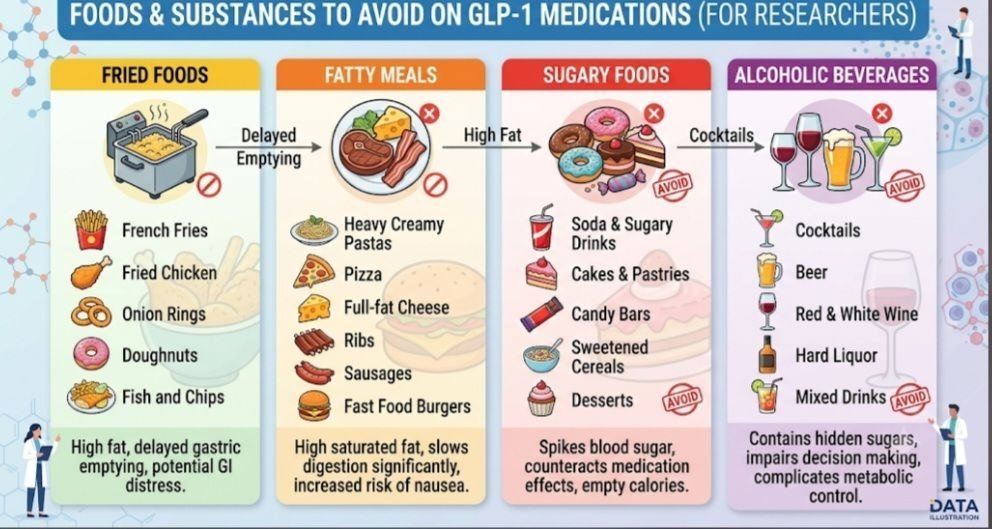
For many people taking semaglutide, tirzepatide, liraglutide, or another GLP-1-based medication, the foods most worth limiting include:
- Fried foods
- Very fatty meals
- Extremely large portions
- Highly processed foods
- Large amounts of added sugar
- Alcohol
- Carbonated beverages when they worsen bloating or reflux
- Very spicy foods when they trigger symptoms
- Large quantities of raw, difficult-to-tolerate vegetables
- Low-protein snack foods
- Calorie-heavy beverages
- Heavy meals close to bedtime
- Foods that repeatedly trigger nausea, reflux, bloating, diarrhea, or abdominal discomfort
The goal is not to create an unnecessarily restrictive diet.
The goal is to make the limited amount of food you can comfortably eat on a GLP-1 medication nutritionally valuable.
GLP-1 medications can reduce appetite and slow gastric emptying. These effects can make a large meal feel dramatically different from the same meal before treatment. Nausea, vomiting, constipation, diarrhea, abdominal discomfort and other gastrointestinal effects are recognized issues associated with these therapies.
That means food selection becomes much more important.

Why GLP-1 Medications Change How You Tolerate Food
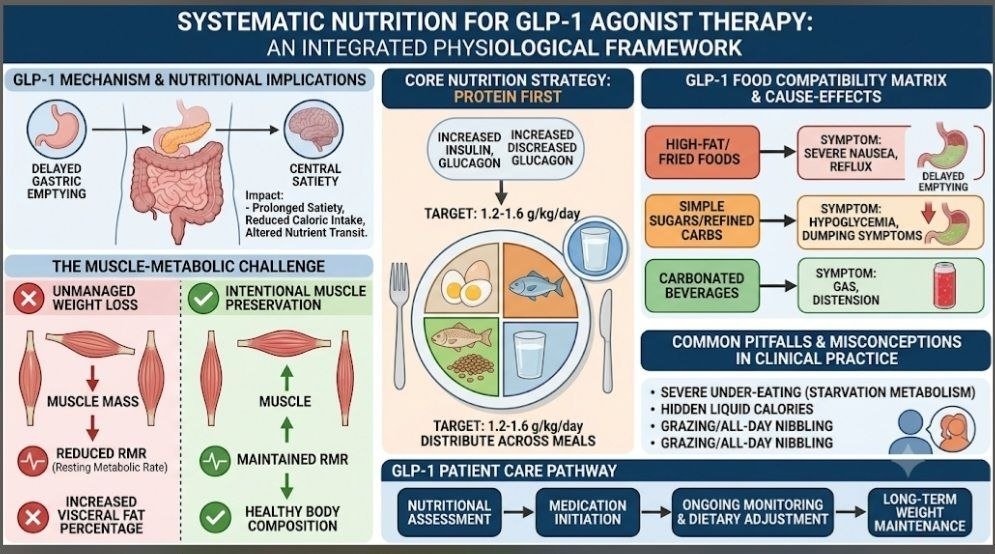
GLP-1-based medications work partly by reducing appetite and altering gastrointestinal function. Some GLP-1 medicines slow how quickly food and beverages move through the stomach, while also influencing appetite and blood-glucose regulation.
This creates an interesting nutritional situation.
Before starting a GLP-1 medication, a person might comfortably eat a large restaurant meal containing fried food, creamy sauces, dessert and alcohol.
After starting treatment, that same meal may result in:
- Severe fullness
- Nausea
- Burping
- Reflux
- Abdominal discomfort
- Vomiting
- Bloating
- A feeling that food is “sitting” in the stomach
This does not mean that every person taking a GLP-1 medication will react to the same foods.
Individual tolerance matters.
One person may tolerate avocado perfectly well while another notices that a large portion of avocado or another high-fat food makes nausea substantially worse.
That is why the best GLP-1 nutrition strategy combines general principles with individual symptom tracking.
15 Foods to Avoid on GLP-1 Medications
1. Fried Foods
Fried chicken, french fries, fried fish, onion rings, fried pastries and similar foods are among the first foods to avoid on GLP-1 medications when gastrointestinal symptoms are a problem.
The issue isn’t that fried food is uniquely “toxic.”
The problem is the combination of:
- High fat
- High calorie density
- Large portions
- Often high sodium
- Low nutritional value relative to calories
A person whose appetite has already been reduced may only have room for a relatively small amount of food.
If a large portion of that limited food intake comes from fried foods, there may be less room for protein, vegetables, fruit and other nutrient-dense foods.
Better alternatives
Try:
- Baked chicken
- Grilled chicken
- Baked fish
- Air-fried foods with minimal added oil
- Roasted vegetables
- Boiled or baked potatoes
- Lean turkey
The goal isn’t “zero fat.”
The goal is better tolerance and greater nutrient density.
Very High-Fat Meals
This is one of the most important categories when discussing foods to avoid on GLP-1 medications.
High-fat meals can be particularly uncomfortable for some people taking GLP-1 therapies because these medications can slow gastric emptying.
Examples include:
- Fatty cuts of beef
- Large portions of bacon
- Heavy cream sauces
- Large amounts of cheese
- Deep-fried foods
- Very oily meals
- Large portions of avocado
- Excessive amounts of nuts or nut butter
- Heavy restaurant meals
Importantly, this does not mean healthy fats should be eliminated.
Olive oil, avocado, nuts, seeds and fatty fish can be nutritious foods.
The issue is often dose and timing.
A small amount of olive oil on vegetables may be tolerated well.
A meal containing a large amount of oil, fatty meat, cheese and dessert may be considerably harder to tolerate.
Large Portions
One of the biggest mistakes GLP-1 users make is continuing to eat portions designed for their pre-medication appetite.
GLP-1 medications can significantly reduce hunger and increase fullness.
Consequently, a large meal can become uncomfortable very quickly.
Instead of asking:
“How much food can I eat?”
ask:
“How much food can I comfortably tolerate while still meeting my nutritional needs?”
Try smaller meals.
Eat slowly.
Stop when comfortably satisfied rather than waiting until you feel completely full.
This is particularly important because the goal isn’t to eat as little as physically possible.
The goal is adequate nutrition with an appropriate energy intake.
Highly Processed Foods
Highly processed foods are not automatically forbidden on a GLP-1 medication.
However, diets dominated by ultra-processed foods can create a nutritional problem.
Consider a person who can comfortably eat only a relatively small amount of food each day.
If that person’s available food intake is mostly:
- Cookies
- Chips
- Crackers
- Pastries
- Candy
- Sweetened cereals
- Processed snack bars
- Fast food
then valuable opportunities to consume protein, fiber, vitamins and minerals may be lost.
The important concept is nutrient density.
When appetite is suppressed, every meal has to work harder.
Sugary Foods and Desserts
Large amounts of added sugar can make it easier to consume substantial calories without producing much nutritional value.
Examples include:
- Cakes
- Donuts
- Cookies
- Candy
- Ice cream
- Sweet pastries
- Sugar-heavy breakfast cereals
- Sweetened coffee drinks
This doesn’t mean you can never eat dessert.
A small portion occasionally can fit into an otherwise balanced eating pattern.
The problem occurs when sugary foods repeatedly displace protein-rich and nutrient-dense foods.
This can be particularly relevant when someone says:
“I’m barely eating, but I’m not losing weight.”
A closer look sometimes reveals that a surprisingly large proportion of intake comes from calorie-dense snacks, sauces or beverages.
Alcohol
Alcohol deserves special attention.
Some people notice that alcohol worsens:
- Nausea
- Reflux
- Dehydration
- Poor food choices
- Sleep quality
- Gastrointestinal discomfort
Alcohol also provides calories without supplying the protein and micronutrients that become particularly valuable when appetite is suppressed.
For individuals with diabetes, alcohol can also interact with glucose management and other medications.
If alcohol consistently makes your GLP-1 symptoms worse, avoiding it is a sensible individual strategy.
Carbonated Drinks
Carbonated beverages aren’t universally problematic.
However, carbonation can worsen bloating, belching or abdominal pressure in some people.
Potential triggers include:
- Carbonated water
- Soda
- Sparkling energy drinks
- Carbonated protein drinks
- Beer
- Other fizzy beverages
If carbonation causes discomfort, replace it with:
- Plain water
- Still water
- Unsweetened tea
- Water with electrolytes when appropriate
The important principle is individual tolerance.
8. Very Spicy Foods
Spicy foods aren’t inherently unhealthy.
But if you are experiencing reflux, nausea or stomach discomfort, very spicy meals may make symptoms more noticeable.
This is especially relevant when spicy foods are combined with:
- High fat
- Large portions
- Alcohol
- Fried foods
- Heavy sauces
If you tolerate spicy foods without symptoms, there may be no reason to eliminate them.
If they consistently trigger symptoms, reduce the intensity or portion.
Certain Raw High-Fiber Foods
Fiber is important.
But more fiber isn’t automatically better, particularly when someone is already experiencing significant bloating or constipation.
Large amounts of raw cruciferous vegetables or other difficult-to-tolerate foods may increase discomfort for some people.
Examples can include:
- Raw broccoli
- Large raw kale salads
- Raw cabbage
- Large quantities of bran
- Very large portions of raw vegetables
A useful strategy is to experiment with preparation.
Try:
- Steamed vegetables
- Cooked spinach
- Cooked carrots
- Zucchini
- Oatmeal
- Soups
- Other softer foods
Fiber should generally be increased gradually and accompanied by adequate fluid intake rather than suddenly adding enormous amounts of roughage.
Low-Protein Snack Foods
One of the biggest nutritional mistakes on GLP-1 therapy is allowing appetite suppression to turn the diet into a collection of snacks with very little protein.
Examples include:
- Rice cakes alone
- Crackers
- Chips
- Cookies
- Low-protein cereal
- Candy
- Some low-protein “diet” bars
These foods may be convenient.
But if your appetite is very low, you need to prioritize foods that provide substantial nutrition in a relatively small volume.
Better options include:
- Greek yogurt
- Eggs
- Cottage cheese
- Fish
- Chicken
- Turkey
- Tofu
- Protein-rich soups
- Appropriate protein shakes
Liquid Calories
Liquid calories are easy to overlook.
Examples include:
- Sweetened coffee
- Fruit juice
- Soda
- Smoothies
- Alcohol
- Sweetened energy drinks
- High-calorie specialty beverages
A person can consume hundreds of calories without experiencing the same fullness associated with solid food.
This can become particularly important when someone experiences a weight-loss plateau.
At the same time, liquid nutrition can be useful when solid food is difficult to tolerate.
A low-volume, protein-rich shake may be much easier to consume than a large solid meal when nausea or early fullness is severe.
The distinction is therefore:
Avoid unnecessary liquid calories, but don’t automatically avoid nutritious liquid protein when it helps you meet nutritional needs.
Heavy Meals Before Bed
Large evening meals can be problematic for people experiencing reflux or regurgitation.
In one anonymized case from my experience, an individual taking semaglutide was experiencing severe evening nausea, acid regurgitation and morning sulfur burps.
The dietary pattern included a high-fat dinner and an evening glass of wine.
The intervention focused on:
- Leaner evening protein
- Smaller fat portions
- Removing alcohol
- Avoiding solid food close to bedtime
The person’s symptoms improved substantially.
This is an individual observational case, not evidence that the same result will occur in every GLP-1 user.
Still, it illustrates an important principle:
Meal timing and meal composition can matter.
Foods That Personally Trigger Your Symptoms
This may be the most important category of all.
There is no universal list of foods that every GLP-1 user must avoid.
Instead, identify your personal triggers.
For example:
| Symptom | Foods worth testing for tolerance |
|---|---|
| Nausea | Fried foods, high-fat meals, large portions |
| Reflux | Heavy meals, alcohol, late-night meals, high-fat foods |
| Bloating | Carbonation, very large meals, certain raw vegetables |
| Constipation | Low-fiber patterns, inadequate fluids, low food intake |
| Diarrhea | Very fatty meals, certain sweeteners, foods personally triggering symptoms |
| Early fullness | Large portions, calorie-dense heavy meals |
| Abdominal discomfort | Individual trigger foods, large meals, carbonation |
Keep a simple food-and-symptom diary for a week or two.
Look for patterns rather than blaming every symptom on the medication.
Extremely Low-Nutrient “Diet” Foods
The word “diet” on a package doesn’t automatically mean a food is appropriate for GLP-1 nutrition.
Some highly processed diet products may be:
- Low in protein
- Low in micronutrients
- Low in fiber
- Highly sweetened
- Easy to overconsume
- Poorly tolerated
Instead, prioritize foods that provide several nutritional benefits simultaneously.
For example:
Greek yogurt can provide protein and calcium.
Eggs provide protein and several micronutrients.
Fish provides protein and, depending on the variety, beneficial fatty acids.
Vegetables and fruit contribute fiber and micronutrients.
The goal is to maximize nutritional value without requiring large portions.
Constant Grazing and Unstructured Snacking
GLP-1 medications can reduce appetite, but they don’t automatically eliminate learned eating behaviors.
Someone can still:
- Snack while watching television
- Eat because of boredom
- Drink calorie-containing beverages
- Taste food repeatedly while cooking
- Eat small amounts throughout the day without tracking them
Those small amounts can accumulate.
This is especially important when someone reports:
“My appetite is controlled, but my weight has stopped decreasing.”
A medication can make hunger easier to control without completely eliminating habitual eating.
GLP-1 treatment works best when the medication is combined with sustainable eating behaviors and appropriate physical activity.
What to Eat Instead on GLP-1 Medications
The question shouldn’t stop at foods to avoid on GLP-1 medications.
The more useful question is:
What should I eat when my appetite is small?
Think about building meals around four priorities:
1. Protein
Examples:
- Chicken breast
- Turkey
- Fish
- Eggs
- Greek yogurt
- Cottage cheese
- Tofu
- Lean beef
- Lentils
- Protein-rich soups
2. Vegetables
Choose preparations that you tolerate well.
If raw vegetables cause bloating, try cooked vegetables.
3. Fruit
Fruit can provide carbohydrates, fiber, water and micronutrients.
Good choices depend on individual tolerance.
4. Whole-food carbohydrates
Examples include:
- Oats
- Potatoes
- Brown rice
- Quinoa
- Whole grains
- Beans
- Lentils
You don’t need to eliminate carbohydrates simply because you’re taking a GLP-1 medication.
The Protein-First GLP-1 Nutrition Strategy
One of the most useful strategies I recommend is protein first.
When appetite is severely reduced, eating order matters because you may become full before finishing your meal.
If protein is left until the end, it may be the food you consistently fail to finish.
Instead:
Protein → vegetables/fruit → carbohydrates and other foods according to tolerance
Examples include:
- Eggs before toast
- Chicken before rice
- Fish before potatoes
- Greek yogurt before fruit
- Tofu before noodles
This is a practical strategy rather than a universal medical requirement.
How Much Protein Do You Need on a GLP-1?
The standard adult protein RDA is approximately 0.8 g/kg/day, but active weight loss can create different nutritional considerations.
Recent nutrition reviews in the GLP-1 era have proposed protein intakes around 1.2–1.6 g/kg/day for appropriate adults, with individualized modifications for factors such as age, activity level, kidney disease and overall health.
This is why I generally view protein as a priority rather than an afterthought during significant weight loss.
A practical meal pattern might look like:
| Meal | Example | Approximate Protein |
| Breakfast | Greek yogurt + eggs | 25–30 g |
| Lunch | Grilled chicken + vegetables | 25–35 g |
| Snack | Protein-rich yogurt or shake | 20–25 g |
| Dinner | Salmon/tofu + vegetables + whole grain | 25–35 g |
These are examples, not prescriptions.
People with chronic kidney disease or other medical conditions should discuss individualized protein intake with their healthcare professional.
Why Muscle Preservation Matters During GLP-1 Weight Loss
Weight loss is not simply about the number on the scale.
The body contains:
- Fat mass
- Lean tissue
- Water
- Bone
- Skeletal muscle
- Other tissues
Research shows that GLP-1-based therapies can produce substantial fat loss while also reducing lean mass. Importantly, DXA-measured lean mass should not automatically be interpreted as pure skeletal muscle.
A 2026 meta-analysis of randomized trials found that lean mass represented a meaningful proportion of total weight lost with incretin therapies, although the exact proportion varied between medications and studies.
That is why nutrition and resistance training deserve attention.
Protein provides amino acids.
Resistance training provides the mechanical stimulus.
Together, they create a much stronger strategy for preserving muscle during weight loss.
Foods to Eat When GLP-1 Medications Cause Nausea
If nausea is your biggest problem, don’t force yourself through huge meals.
Consider:
- Small meals
- Lean protein
- Greek yogurt
- Eggs
- Soup
- Cooked vegetables
- Plain whole grains
- Smaller portions
- Still water
- Nutritionally complete protein drinks when appropriate
Temporarily reduce foods that consistently worsen nausea.
In particular, many people find very fatty or fried meals harder to tolerate.
However, persistent or severe nausea and vomiting should not simply be managed by changing food. Speak with your healthcare professional.
Foods to Eat for GLP-1-Related Constipation
Constipation is a common concern for some people using GLP-1-based therapies.
Instead of immediately adding huge amounts of raw fiber, think about:
Fluid + gradual fiber + movement + tolerable foods.
Potential choices include:
- Oatmeal
- Cooked vegetables
- Fruit
- Ground flaxseed
- Chia in appropriate amounts
- Lentils
- Beans if tolerated
- Other soluble-fiber sources
Some people may benefit from psyllium, but fiber supplementation isn’t appropriate in every situation.
If constipation is severe, persistent, accompanied by significant abdominal pain or vomiting, or you cannot pass stool or gas, seek medical assessment rather than continually adding fiber.
Can Food Choices Cause a GLP-1 Weight-Loss Plateau?
Yes, food habits can contribute to a plateau.
But a plateau is not automatically evidence that you are “eating too much.”
GLP-1 medications can reduce hunger and food intake, but they do not eliminate the relationship between energy intake, energy expenditure, body composition and body weight.
Common contributors include:
Hidden liquid calories
A person may barely eat but consume large amounts of calories through beverages.
Grazing
Small snacks throughout the day can become significant.
Reduced physical activity
As body weight falls, energy expenditure can change.
Loss of lean mass
Changes in lean tissue can influence energy expenditure and physical function.
Very low intake
Some people respond to appetite suppression by eating far too little, potentially making it difficult to meet protein and micronutrient needs.
Medication and medical factors
Not every plateau is dietary.
Medication regimen, adherence, underlying medical conditions and individual biological variation can all matter.
The answer to a plateau is therefore not automatically “eat less.”
Three Anonymized GLP-1 Nutrition Cases
The following cases are anonymized observations from experience and should not be interpreted as clinical trial evidence or a guarantee of outcomes.
Case 1: Severe Nausea and Reflux
A 42-year-old woman using semaglutide at 1.0 mg weekly developed severe evening nausea, acid regurgitation and morning sulfur burps.
Her diet included:
- Fatty meats
- Large portions of avocado and olive oil
- Evening red wine
- Heavy evening meals
The strategy was to:
- Replace fatty evening proteins with leaner options
- Move concentrated fats to smaller portions earlier in the day
- Eliminate alcohol
- Avoid solid food close to bedtime
She reported approximately an 80% reduction in nausea within 48 hours and resolution of reflux within approximately one week.
Again, this is an individual observation—not proof that the intervention will produce the same result for another person.
Case 2: Constipation and Bloating
A 58-year-old man using tirzepatide at 5 mg weekly developed significant abdominal distension and constipation.
His food pattern included:
- Large raw vegetable salads
- Raw broccoli and kale
- Carbonated protein beverages
- Low-fiber white rice
- Inadequate overall fiber variety
The approach included:
- Switching some raw vegetables to cooked vegetables
- Removing carbonation
- Increasing fluid intake
- Introducing fiber gradually
He reported improved bowel regularity over several days.
This illustrates an important principle:
Constipation management isn’t simply “eat as much fiber as possible.”
Tolerance, hydration, food preparation and the individual’s overall gastrointestinal situation matter.
Case 3: Early Weight Loss and Lean-Tissue Concern
A 35-year-old man using semaglutide at 2.4 mg weekly experienced pronounced appetite suppression.
His diet had become dominated by:
- Low-protein soups
- “Diet” snack bars
- Skipped meals
- Very small food portions
He experienced rapid weight loss accompanied by fatigue and weakness.
The nutrition strategy emphasized:
- Protein-first eating
- Approximately 1.4 g/kg/day of protein as an individualized target
- Small protein-containing meals
- Greek yogurt
- Egg whites
- Whey isolate
- More structured feeding windows
- Resistance training
He reported improved energy within approximately 10 days, while subsequent body-composition monitoring showed a more favorable pattern of weight loss.
Again, the result is an individual observation, and body-composition measurements such as DXA should be interpreted carefully because lean tissue is not identical to skeletal muscle.
Common Mistakes GLP-1 Users Make
Mistake 1: “I’m not hungry, so I don’t need to eat.”
This can become problematic.
GLP-1 therapy can dramatically reduce appetite.
Nutrition therefore sometimes has to become structured rather than hunger-driven.
The goal isn’t to force enormous meals.
It’s to make sure the smaller amount of food you consume still provides adequate protein and micronutrients.
Mistake 2: “The medication does all the work.”
GLP-1 medications can be extremely effective tools.
But medication doesn’t choose your food quality.
It doesn’t automatically provide:
- Protein
- Fiber
- Vitamins
- Minerals
- Adequate hydration
- Resistance training
The medication can reduce hunger.
You still direct the nutrition.
Mistake 3: “All calories are equal.”
Calories matter.
But nutritional quality matters too.
If appetite is severely reduced, consuming 500 calories of low-nutrient snack foods is very different nutritionally from consuming 500 calories containing substantial protein, vegetables, fruit and other nutrient-dense foods.
This is why nutrient density becomes increasingly important as appetite falls.
Mistake 4: “Healthy fats can’t cause problems.”
Healthy foods can still cause individual symptoms.
A large amount of avocado is nutritious.
A large amount of olive oil is nutritious.
Salmon is nutritious.
But if a person has significant nausea or delayed gastric emptying, a very high-fat meal may be difficult to tolerate.
Healthy doesn’t mean unlimited.
Mistake 5: “I need enormous amounts of fiber.”
Fiber is important, but aggressively adding fiber can sometimes worsen bloating and discomfort.
Increase fiber gradually.
Drink enough fluid.
Choose foods you tolerate.
And seek medical evaluation when symptoms are severe.
Mistake 6: “If weight loss stops, I should eat even less.”
This can be counterproductive.
A plateau should be investigated rather than automatically answered with more restriction.
Look at:
- Protein intake
- Liquid calories
- Portion sizes
- Grazing
- Physical activity
- Sleep
- Medication adherence
- Body composition
- Medical factors
The objective is quality weight loss, not simply the lowest possible calorie intake.
A Simple GLP-1 Daily Eating Framework
Here’s a practical framework that can make GLP-1 nutrition easier.
Morning
Choose a protein-rich option.
Examples:
- Eggs + fruit
- Greek yogurt + berries
- Protein-rich oatmeal
- Cottage cheese + fruit
Midday
Build around lean protein.
Examples:
- Chicken + cooked vegetables + rice
- Turkey + whole grain + salad
- Fish + potatoes + vegetables
- Tofu + vegetables + whole grain
Afternoon
If needed, choose a protein-focused snack.
Examples:
- Greek yogurt
- Cottage cheese
- Protein shake
- Eggs
- Fruit with a protein source
Evening
Keep portions comfortable.
Examples:
- Baked fish + vegetables
- Skinless chicken + cooked vegetables
- Tofu + rice + vegetables
- Lean turkey + potatoes
If reflux is an issue, experiment with eating dinner earlier and avoiding large meals immediately before lying down.
What If You Can Barely Eat on a GLP-1?
This is an important situation.
Do not treat extreme appetite suppression as a competition.
The objective isn’t:
“How little can I eat?”
The objective is:
“How can I maintain adequate nutrition while the medication controls my appetite?”
Prioritize:
- Protein
- Fluids
- Nutrient-dense foods
- Tolerable fiber
- Fruits and vegetables
- Appropriate carbohydrates
- Micronutrient adequacy
If you are consistently unable to eat or drink enough, or you’re experiencing repeated vomiting or significant weakness, contact your healthcare professional.
What Researchers and GLP-1 Users Should Understand About Food
The most important nutritional shift is moving away from a simple “good food versus bad food” model.
A more useful framework is:
Tolerability
Can you comfortably digest it?
Nutrient density
Does it provide meaningful nutrition?
Protein contribution
Does it help preserve lean tissue during weight loss?
Energy density
Does it consume a large proportion of your available calories?
Individual response
Does this specific food repeatedly trigger symptoms?
Sustainability
Can you maintain the eating pattern long-term?
This is much more useful than creating an arbitrary list of forbidden foods.
GLP-1 Medications Are a Tool, Not a License to Ignore Nutrition
After working as a supplier, educator and researcher since 2003, one of the most important lessons I would emphasize is this:
The medication can control hunger, but it cannot choose the quality of the weight you lose.
A person can lose substantial weight while simultaneously failing to consume enough protein.
A person can lose weight while eating primarily ultra-processed foods.
A person can lose weight while experiencing persistent gastrointestinal symptoms.
And a person can lose weight so quickly that fatigue, weakness or nutritional inadequacy becomes a concern.
That’s why the best approach isn’t simply:
“What foods should I avoid?”
It is:
“How do I use the reduced appetite created by my GLP-1 medication to build a nutritionally stronger diet?”
That is the more important question.
When GLP-1 Side Effects Need Medical Attention
Food adjustments can sometimes improve mild, predictable gastrointestinal discomfort.
They should not replace medical evaluation for serious symptoms.
Contact your healthcare professional if you experience persistent or severe:
- Vomiting
- Abdominal pain
- Dehydration
- Inability to maintain fluids
- Severe or persistent constipation
- Significant abdominal distension
- Symptoms that are worsening rather than improving
Do not independently change, increase, decrease or discontinue a prescription GLP-1 medication based solely on information in an online article.
Your healthcare professional can determine whether symptoms are dietary, medication-related or caused by another condition.
Frequently Asked Questions
1. What foods should I avoid on GLP-1 medications?
The foods to avoid or limit on GLP-1 medications are generally those that repeatedly worsen your symptoms or provide poor nutritional value for the amount of food they contain. Fried foods, very high-fat meals, large portions, excessive added sugar, alcohol and highly processed foods are common foods to limit, especially when they trigger nausea, reflux or abdominal discomfort.
There is no universal list of foods that every GLP-1 user must completely eliminate.
2. Can I eat fried food while taking semaglutide or tirzepatide?
You may be able to tolerate small amounts, but fried foods can be difficult for some people because they are typically high in fat and calorie-dense.
If fried food consistently causes nausea, reflux, bloating or discomfort, reducing it or replacing it with baked, grilled or air-fried alternatives may help.
3. What foods are best to eat on GLP-1 medications?
Prioritize protein-rich, nutrient-dense foods such as eggs, fish, lean poultry, Greek yogurt, tofu, lean meats, vegetables, fruit, whole grains and appropriately portioned high-protein snacks.
If appetite is very low, focus on foods that provide substantial nutrition without requiring large portions.
4. What foods should I avoid on GLP-1 medications if I have nausea?
Start by examining large portions, fried foods and very high-fat meals.
Some people also find alcohol, heavily spiced foods and certain strong-smelling foods difficult to tolerate.
Try smaller meals, eat slowly and choose leaner foods.
Persistent or severe nausea and vomiting should be discussed with your healthcare professional.
5. Can I drink alcohol while taking a GLP-1 medication?
Alcohol may worsen nausea, reflux, dehydration or poor dietary choices in some people. It can also complicate blood-glucose management, particularly for people using other glucose-lowering medications.
If alcohol consistently causes symptoms, avoiding it is the safest practical choice.
Discuss alcohol use with your healthcare professional if you have diabetes or take other medications that affect glucose.
6. Can I eat carbohydrates while taking a GLP-1?
Yes.
GLP-1 therapy does not automatically require eliminating carbohydrates.
Appropriate portions of foods such as oats, potatoes, rice, beans, lentils, fruit and whole grains can fit into a balanced diet.
The overall dietary pattern matters more than eliminating an entire macronutrient category.
7. Why do fatty foods make me feel sick on a GLP-1?
GLP-1-based medications can affect gastric emptying and gastrointestinal function. A very large, high-fat meal may therefore feel particularly uncomfortable for some users.
If you repeatedly experience nausea or reflux after fatty meals, experiment with smaller portions and leaner food choices.
8. What should I eat if I have constipation on a GLP-1?
Focus on adequate fluid intake, gradual fiber intake and foods you tolerate.
Potential choices include oatmeal, cooked vegetables, fruit, lentils and other fiber-containing foods.
However, severe constipation, significant abdominal pain, vomiting, marked distension or inability to pass stool or gas requires medical assessment rather than simply adding more fiber.
9. Can poor food choices cause a weight-loss plateau on GLP-1 medications?
They can contribute.
Liquid calories, frequent snacking, calorie-dense foods and reduced activity can all affect energy balance.
However, plateaus have multiple possible causes. Medication adherence, dose, biological adaptation, body-composition changes and medical factors may also matter.
A plateau should be evaluated rather than automatically treated by drastically reducing food intake.
10. How much protein should I eat on a GLP-1?
There is no single protein target that applies to every person.
Recent nutrition literature has proposed approximately 1.2–1.6 g/kg/day for appropriate adults during active weight loss, with individualization based on factors such as age, physical activity, kidney function and overall health.
Protein needs should be discussed with a qualified healthcare professional or dietitian when medical conditions affect nutrition requirements.
11. Should I stop eating when I am not hungry?
Not necessarily.
GLP-1 medications can suppress appetite significantly. If you consistently eat too little, you may struggle to obtain adequate protein, fluids and micronutrients.
Rather than forcing large meals, consider smaller, structured, nutrient-dense meals.
12. Are healthy fats bad on GLP-1 medications?
No.
Healthy fats can be part of a balanced diet.
The issue is that large quantities of high-fat foods may be poorly tolerated by some people experiencing GLP-1-related gastrointestinal symptoms.
Portion size and individual tolerance are more useful concepts than labeling healthy fats as “bad.”n
Final Takeaway
The best answer to “What foods should I avoid on GLP-1 medications?” isn’t a rigid list of forbidden foods.
It is a strategy.
Limit foods that repeatedly worsen your symptoms.
Reduce oversized and very high-fat meals.
Be cautious with fried foods, excessive added sugar, alcohol and highly processed foods.
Pay attention to carbonation and spicy foods if they trigger symptoms.
Don’t allow appetite suppression to turn your diet into coffee, crackers and a few bites of food.
Instead, use your reduced appetite as an opportunity to prioritize protein, nutrient density, hydration, vegetables, fruit and appropriately portioned whole-food carbohydrates.
Most importantly, remember that weight loss is not the only outcome that matters.
The quality of the weight you lose matters too.
Recent evidence continues to show that incretin-based therapies produce substantial fat loss while also producing measurable reductions in lean mass in many studies. The literature increasingly emphasizes adequate protein, resistance training, gastrointestinal-tolerance management and nutritional monitoring as important components of high-quality weight loss.
After more than two decades of experience as a peptide supplier, educator and researcher, my perspective is simple:
GLP-1 medications reduce appetite. You must direct your nutrition.
The medication can make it easier to eat less.
It cannot decide whether the smaller amount of food you eat contains enough protein.
It cannot choose your vegetables.
It cannot preserve muscle without the nutritional and physical-activity environment needed to support it.
And it cannot tell you which foods your individual digestive system tolerates best.
That is where informed nutrition becomes essential.
For additional educational information about peptides, research materials and related topics, you can explore OasBioScience.
Important Medical Disclaimer
This article is intended for general educational and informational purposes. It is not a substitute for individualized medical, nutritional or pharmaceutical advice.
GLP-1 medications are prescription therapies and should be used under appropriate medical supervision. Individual responses to semaglutide, tirzepatide, liraglutide and other GLP-1-based medications vary.
Do not change your medication dose, discontinue treatment or use prescription medication based solely on information presented in this article.
If you experience severe or persistent gastrointestinal symptoms, dehydration, significant abdominal pain, repeated vomiting or other concerning symptoms, contact a qualified healthcare professional promptly.
Continue Learning: If you found this guide helpful, you may also want to read our previous peptide education articles covering the following topics
- What Bacteriostatic Water Should I Use For My Peptide?
- What’s Peptide Reconstitution?
- How Should Peptides Be Stored?
- Tirzepatide Side Effects: 15 Powerful Facts, Warning Signs & Safe Management
- Why am I not losing weight on semaglutide?
- How Much Weight Can You Lose on Tirzepatide?
- Which peptide suppresses appetite the most?
- Peptide Bubbles after reconstitution?
Scientific Reference: For additional peer-reviewed information on peptide stability, sterile preparation, and pharmaceutical reconstitution practices, visit
