
Description
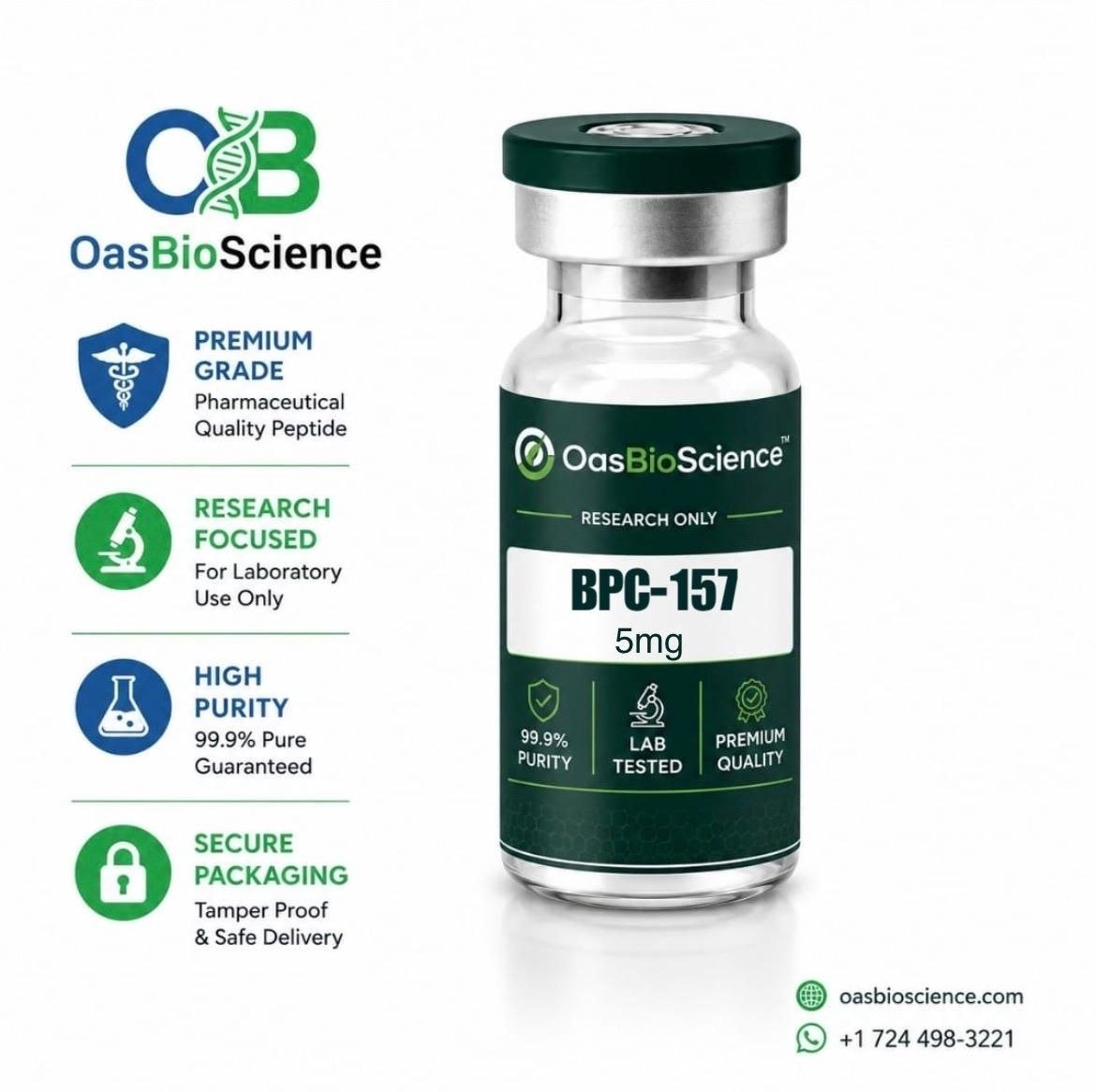
BPC-157 Peptide – High-Purity Research Peptide
Product Overview
BPC-157 peptide is a synthetic peptide derived from a naturally occurring protective protein sequence found in gastric juice. In scientific literature, BPC-157 has been investigated in studies involving cell signaling, tissue-repair mechanisms, angiogenesis, gastrointestinal integrity, and peptide-mediated protective pathways.
This product is supplied as a white lyophilized powder intended strictly for laboratory and scientific research purposes only. Each batch is manufactured under controlled conditions and tested for identity and purity to support reliable research applications.
Technical Specifications
Parameter | Specification
Product Name | BPC-157 peptide
Peptide Type | Synthetic pentadecapeptide
Sequence | Gly-Glu-Pro-Pro-Pro-Gly-Lys-Pro-Ala-Asp-Asp-Ala-Gly-Leu-Val
Molecular Formula | C62H98N16O22
Molecular Weight | 1419.53 g/mol
Purity | ≥98% by HPLC
Appearance | White to off-white lyophilized powder
Available Vial Sizes
The most commonly requested laboratory sizes include:
• 2mg
• 5mg
• 10mg
• 15mg
These sizes are widely used for research, analytical, and preclinical laboratory applications.
Purity and Quality Assurance
Each batch of BPC-157 peptide undergoes analytical testing to verify:
• HPLC purity ≥98%
• Peptide identity by mass spectrometry
• Visual inspection for color and consistency
• Controlled lyophilization and moisture-reduction procedures
These quality-control measures help ensure consistent performance and reliable batch-to-batch reproducibility for research environments.
Appearance
• Color: White to slightly off-white
• Form: Sterile-filtered lyophilized powder
• Odor: Odorless
• Solubility: Soluble in appropriate aqueous research solvents after reconstitution
Because peptides are hygroscopic compounds, slight differences in powder texture may occur naturally and do not necessarily indicate a quality issue.
Storage Recommendations
Before Reconstitution
• Store at -20°C for long-term preservation
• Protect from light, heat, and moisture
• Keep the vial tightly sealed until use
• Avoid unnecessary temperature fluctuations
After Reconstitution
• Store refrigerated at 2-8°C
• Protect from prolonged light exposure
• Avoid repeated freeze-thaw cycles
• Follow your laboratory’s validated stability and handling procedures
Proper cold-chain storage is recommended to help preserve peptide integrity during storage and use.
General Reconstitution Information
For laboratory preparation:
1. Allow the vial to equilibrate to room temperature before opening.
2. Add an appropriate sterile research-grade diluent slowly along the inside wall of the vial.
3. Gently swirl until the powder is completely dissolved.
4. Do not shake vigorously or vortex aggressively, as excessive agitation may contribute to foaming and may affect peptide stability.
The choice of diluent and final concentration should be determined according to the researcher’s validated protocol and analytical requirements.
Intended Use Statement
BPC-157 peptide is intended for laboratory research and analytical purposes only.
• Not for human consumption
• Not for medical, therapeutic, or diagnostic use
• Not for use in food, drugs, cosmetics, or dietary supplements
Purchase of this product confirms that it will be handled by qualified personnel in an appropriate research environment.
Packaging and Shipping
Packaging
Each vial is packaged using a professional laboratory protection system:
• Borosilicate glass peptide vial
• Butyl rubber stopper
• Aluminum crimp seal
• Individual protective sleeve or box
• Lot number and product identification label
Shipping
• Securely packaged to minimize the risk of breakage
• Temperature-protective materials used when appropriate
• Moisture-resistant secondary packaging included
• Tracking information provided for most shipments
International shipping availability may vary depending on local import regulations and carrier restrictions.
Why Researchers Choose BPC-157 Peptide
• High purity (≥98% HPLC)
• Verified peptide identity testing
• Stable lyophilized powder format
• Professional secure packaging
• Suitable for cell-signaling, tissue-response, gastrointestinal, and peptide-pathway research applications
Frequently Asked Questions (FAQ)
What is BPC-157 peptide?
BPC-157 peptide is a synthetic pentadecapeptide that has been studied in experimental research involving cellular signaling, tissue-repair pathways, vascular responses, and gastrointestinal protective mechanisms.
What does ≥98% by HPLC mean?
This means that at least 98% of the analyzed material corresponds to the target peptide when tested using High-Performance Liquid Chromatography (HPLC), a standard analytical method used to assess peptide purity.
Why is BPC-157 supplied as a lyophilized powder?
Lyophilization removes water from the peptide preparation, helping improve stability during storage and transportation and reducing degradation prior to reconstitution.
How should unopened vials be stored?
Unopened vials should be stored at -20°C, protected from light and moisture, for optimal long-term stability.
Can the peptide be refrigerated after reconstitution?
Yes. After reconstitution, it should generally be stored at 2-8°C and protected from excessive light exposure. Laboratories should follow their own validated stability and handling procedures.
What diluent should be used?
The appropriate sterile research-grade diluent depends on the specific experimental protocol. Researchers should select solvents and concentrations according to their validated laboratory methods.
Is this product sterile?
The peptide is produced using controlled manufacturing processes and sterile filtration prior to lyophilization; however, it is sold for research use only, and researchers are responsible for following appropriate sterility and handling procedures.
Is BPC-157 peptide suitable for human use?
No. BPC-157 peptide sold on this website is strictly for research purposes only and is not intended for human or veterinary use.
Do you provide lot or batch identification?
Yes. Each vial includes a lot number for inventory control, traceability, and laboratory record-keeping purposes.
Reviews
There are no reviews yet.