

Description
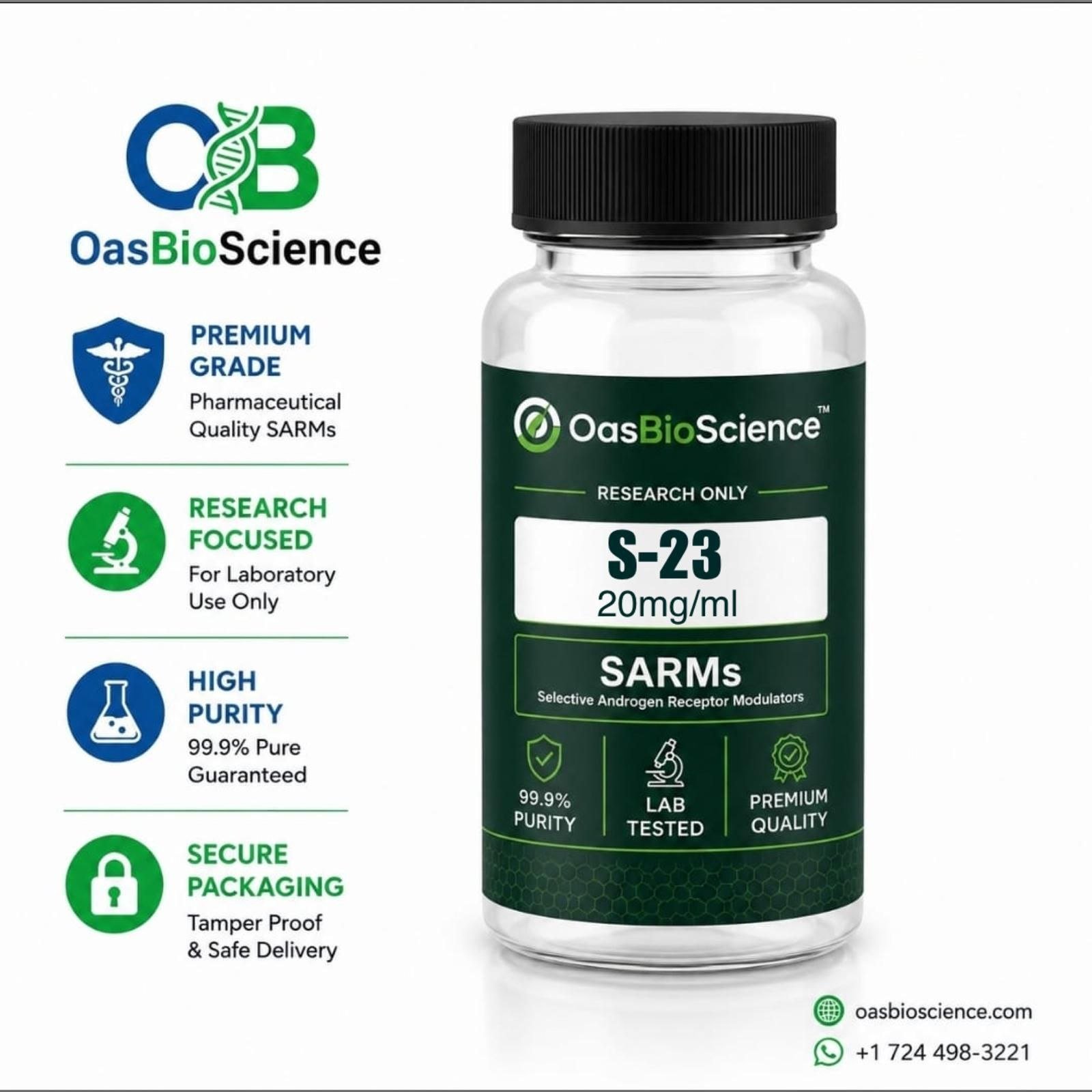
S-23 SARM Overview
S-23 is a synthetic selective androgen receptor modulator (SARM) that has been investigated in experimental pharmacology and androgen-receptor research.
As a small molecule, S-23 is structurally different from peptide products. It does not have an amino-acid sequence and should not be described as a lyophilized peptide.
Research involving S-23 has focused on androgen receptor activity, receptor selectivity, molecular pharmacology, and related experimental pathways.
What Is S-23?
S-23 is a synthetic small-molecule compound belonging to the SARM research class.
SARMs are compounds investigated for their interactions with androgen receptors. S-23 has been studied in experimental models to better understand androgen-receptor signaling and the pharmacological behavior of selective androgen receptor ligands.
Potential research areas include:
- Androgen receptor biology
- Receptor-binding studies
- Small-molecule pharmacology
- Drug-discovery research
- Structure–activity relationship research
- Molecular characterization
- Pharmacological screening
S-23 should be presented as a research compound, rather than a dietary supplement, therapeutic product, or peptide.
Molecular Formula, Molecular Weight & Chemical Structure
Because S-23 is a small molecule, peptide sequence is not applicable.
| Property | Specification |
|---|---|
| Product name | S-23 |
| Compound class | Selective androgen receptor modulator (SARM) |
| Chemical type | Small molecule |
| Molecular formula | C₁₈H₁₃ClN₂O₂ |
| Molecular weight | 324.76 g/mol |
| Peptide sequence | Not applicable |
For professional research documentation, chemical identity should be supported by appropriate analytical techniques, such as HPLC and mass spectrometry.
Purity
A research-grade specification may be listed as:
Purity: ≥98% by HPLC
Only use this specification when the corresponding batch has actually been tested to support the claim.
A professional Certificate of Analysis may include:
- HPLC purity
- HPLC chromatogram
- Mass spectrometry
- Expected molecular weight
- Observed molecular weight
- Lot/batch number
- Testing date
- Appearance
- Assay information where applicable
Researchers should always refer to the batch-specific COA rather than relying solely on a general website specification.
Appearance
S-23 is a small-molecule research compound, not a peptide.
Depending on the formulation and manufacturing process, it may be supplied as a white to off-white powder.
The exact appearance should be confirmed against the relevant batch specification or COA.
Visual appearance alone does not establish chemical identity or purity.
Available Research Quantities
Available quantities should correspond to your actual inventory.
Potential research packaging options include:
- 10 mg
- 25 mg
- 50 mg
- 100 mg
- 250 mg
Smaller quantities may be suitable for analytical laboratories, while larger quantities can support repeated laboratory experiments.
Only advertise quantities that you actually stock and can document appropriately.
Each container should clearly identify:
S-23 + quantity + lot number + research-use statement
Storage Recommendations
Store S-23 according to the stability information established for the specific batch.
General laboratory considerations include:
- Keep the container tightly closed.
- Protect from excessive moisture.
- Avoid unnecessary exposure to heat.
- Protect from direct light.
- Minimize repeated temperature fluctuations.
- Follow the manufacturer’s documented storage conditions.
- Keep the compound in its original labeled container.
For exact storage requirements, researchers should consult the applicable technical documentation and COA.
Reconstitution / Preparation Information
S-23 is not a peptide, so conventional peptide reconstitution instructions do not apply.
Preparation for laboratory research depends on:
- The experimental application
- Compound solubility
- Selected laboratory solvent
- Required research concentration
- Experimental design
Researchers should use validated laboratory procedures and document:
- Compound identity
- Lot number
- Solvent
- Concentration
- Preparation date
- Storage conditions
There is no single preparation procedure appropriate for every S-23 experiment.
This product page does not provide human dosing or administration instructions.
Intended Use — Research Only
S-23 is intended for laboratory and scientific research purposes only.
Potential research applications include:
- Androgen receptor research
- Small-molecule pharmacology
- Receptor-binding studies
- Drug-discovery research
- Structure–activity relationship studies
- Molecular characterization
- Experimental pharmacology
S-23 should not be marketed as:
- A bodybuilding supplement
- A muscle-building product for consumers
- A testosterone replacement
- A performance-enhancing product
- A medication
- A dietary supplement
- A treatment for low testosterone
Research Use Only. Not for Human or Veterinary Administration.
Researchers are responsible for ensuring that their work complies with applicable laws, institutional requirements, and laboratory safety procedures.
Packaging & Shipping Information
Professional packaging should protect the compound while providing clear product identification.
Packaging may include:
- Securely sealed container
- Product identification label
- Net quantity
- Lot/batch number
- Research-use statement
- Protective secondary packaging
- Batch-specific COA
When the product arrives, researchers should inspect the package for visible damage.
Before laboratory storage, verify:
Product name + quantity + lot number + COA
Shipping should follow applicable stability requirements and transportation regulations.
Frequently Asked Questions About S-23
What is S-23?
S-23 is a synthetic small-molecule compound investigated as a selective androgen receptor modulator.
Is S-23 a peptide?
No. S-23 is a small molecule and therefore does not have an amino-acid peptide sequence.
What is the molecular formula?
The commonly reported molecular formula is:
C₁₈H₁₃ClN₂O₂
What is the molecular weight?
The molecular weight is approximately:
324.76 g/mol
Does S-23 have a peptide sequence?
No. A peptide sequence is not applicable because S-23 is a small molecule.
What purity should researchers look for?
A research-grade material may specify ≥98% HPLC purity, provided the batch-specific analytical results support that claim.
What does S-23 look like?
It may be supplied as a white to off-white powder, depending on the formulation and manufacturing process.
Does S-23 require peptide reconstitution?
No. It is not a peptide. Laboratory preparation depends on the experimental application and the compound’s solubility characteristics.
What is S-23 researched for?
S-23 has been investigated in experimental research involving androgen receptor signaling, receptor pharmacology, molecular characterization, and small-molecule drug discovery.
Should S-23 have a COA?
Yes. A batch-specific COA is recommended for professional research material. It can document HPLC purity, mass spectrometry, molecular identity, and lot information.
How should S-23 be stored?
Follow the manufacturer’s specifications for the specific batch and protect the material from excessive moisture, heat, light, and unnecessary temperature fluctuations.
Is S-23 intended for human use?
A research-grade product should be clearly labeled:
Research Use Only — Not for Human or Veterinary Administration.
Key Takeaway
S-23 is a small-molecule research compound, not a peptide.
Key specifications
- Product: S-23
- Compound class: Selective androgen receptor modulator
- Molecular formula: C₁₈H₁₃ClN₂O₂
- Molecular weight: 324.76 g/mol
- Peptide sequence: Not applicable
- Purity: ≥98% by HPLC when supported by the relevant COA
- Appearance: Typically white to off-white powder
- Intended use: Laboratory research only
For a professional product listing, emphasize verified identity, documented purity, analytical testing, accurate labeling, appropriate storage information, and batch-specific COA documentation.
Avoid describing S-23 as a peptide or providing human dosing and administration instructions. Accurate scientific terminology makes the product page more credible and useful for legitimate laboratory research.
Research Use Only. Not for Human or Veterinary Administration.
Continue Learning: If you found this guide helpful, you may also want to read our previous peptide education articles covering the following topics
- Discover the best peptide for obesity research
- Discover the foods to avoid on GLP-1 medications
- Tirzepatide Side Effects: 15 Powerful Facts, Warning Signs & Safe Management
- Why am I not losing weight on semaglutide?
- How Much Weight Can You Lose on Tirzepatide?
- Which peptide suppresses appetite the most?
- Peptide Bubbles after reconstitution?
Scientific Reference: For additional peer-reviewed information on peptide stability, sterile preparation, and pharmaceutical reconstitution practices, visit
United States Pharmacopeia (USP) – USP <797> Sterile Compounding

Reviews
There are no reviews yet.